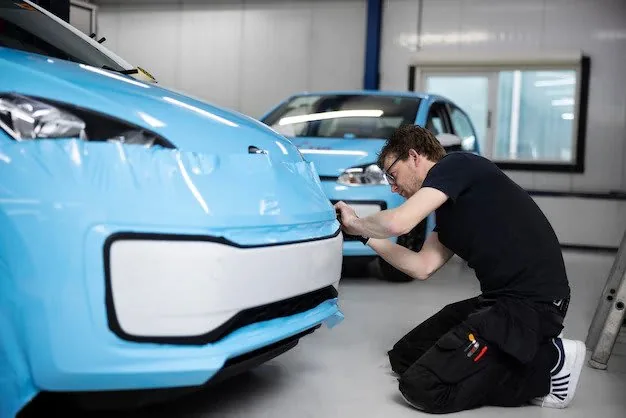
Quick answer
To remove a vinyl car wrap without damaging the paint, work in the shade on a cool panel, warm a section gently, lift the edge with a plastic tool and peel the film back on itself at a low angle. Then clear the glue with an automotive-safe adhesive remover. Removal is easiest within the film's life, about 3-5 years for cast vinyl in UAE heat.
Key takeaways
- Test first: peel a corner. Film that comes off in one sheet is a DIY job; film that snaps into flakes is not.
- Gentle heat, low angle, slow pull. Pulling straight up or fast is what lifts paint.
- Never use metal on paint. Plastic blades and a proper adhesive remover only.
- Resprayed panels are the risk. Factory paint usually survives a good removal; a cheap respray may not.
On this page (9 sections)
- What decides whether the paint comes off with the wrap
- Three quick tests before you start
- Tools that are safe on paint
- How to remove a vinyl car wrap, step by step
- Where removals go wrong
- DIY or professional removal: a decision rule
- After the wrap is off: Mulkiya and permit
- Frequently asked questions
- Send us photos before you peel
Most wraps come off for ordinary reasons. A lease car goes back to the company in Jebel Ali. A company rebrands and the old logo has to go before the new permit design goes on. A personal car has worn its matte grey for four summers and the owner wants the factory white back before selling.
The film itself is rarely the problem. The problem is the adhesive underneath, which has been baked by the sun for years and bonds harder the longer it stays. A careful removal leaves clean, protected paint. A rushed one leaves glue in every seam and, on the wrong panel, paint stuck to the back of the vinyl. This is how we take wraps off at our workshop in Deira, and how to judge if you can do it yourself.
What decides whether the paint comes off with the wrap
Four things decide how a removal goes. You can check all of them before you start.
| Factor | Easy removal | Risky removal |
|---|---|---|
| Paint under the film | Original factory paint | Resprayed or touched-up panels |
| Age of the wrap | Within its life, about 3-5 years for cast vinyl | Well past it, brittle and cracked |
| Film grade | Cast wrap film from a major maker | Economy calendered film used as a wrap |
| Exposure | Covered parking, hand washed | Parked in full sun every day |
Factory paint is baked on at the plant and bonds to the metal far better than the wrap adhesive bonds to the paint. A body-shop respray is often not, especially a cheap one, and that is where paint comes away with the film. If the car had accident repairs before it was wrapped, assume those panels need extra care.
Film grade matters at the end of a wrap as much as at the start. Premium cast films from any of the brands we fit, 3M, Avery Dennison, Hexis, Arlon, Mactac or Orafol, are designed to come off in large pieces within their working life. Economy film baked on for years does not. If you are about to choose film for the next wrap, our guide to the best vinyl for car wraps in Dubai explains the grades.
Three quick tests before you start
A few minutes of testing tells you whether this is a weekend job or one for a workshop.
- The corner test. Pick a lower door corner, warm it slightly and peel a hand-sized piece slowly. If it comes away in one sheet with little glue left behind, the wrap is in good condition. If it cracks into flakes the size of a coin, the film is brittle and every panel will be slow work.
- The glue test. Look at the patch you uncovered. A light haze of adhesive wipes off easily. A thick, stringy layer that stays on the paint means hours of residue removal across the car.
- The paint test. Check the back of the peeled piece in good light. Any flecks of colour mean paint is lifting. Stop on that panel. Also look at door jambs and under the bonnet edge for overspray, a sign that panels were resprayed.
Two passes out of three on a car you know well: a DIY removal is reasonable. Brittle film or any sign of paint on the vinyl: bring it to a professional.
Tools that are safe on paint
- A heat gun on a low setting, or a strong hairdryer. The aim is warm film, not hot. If the panel is too hot to keep your hand on, back off.
- Plastic razor blades and a plastic scraper to lift edges and roll glue off. Metal blades on paint leave scratches you will see on every sunny day.
- An automotive adhesive remover that says it is safe on clear coat. Test it on a hidden area first, such as the inside of a door jamb.
- Plenty of clean microfibre cloths. Glue loads up a cloth quickly; a dirty cloth just spreads it.
- Patience and shade. More removals are spoiled by rushing than by any tool.
Avoid harsh household solvents, petrol and acetone. They can soften plastic trim, haze headlights and dull the clear coat.
How to remove a vinyl car wrap, step by step
- Pick the time. Early morning or evening, in a shaded car park or garage. A panel that has stood in the August sun is too hot: the adhesive smears instead of releasing.
- Wash the car. Sand on the surface turns into sandpaper the moment you start rubbing at glue.
- Work one panel at a time, starting with the easiest, usually a door, so you learn how the film behaves.
- Warm an edge and lift it with a fingernail or plastic blade.
- Fold the film back on itself and pull slowly at a low angle, close to the surface rather than straight out. Keep warming just ahead of the peel line. A steady, slow pull leaves more glue on the film and less on the paint.
- Leave the hard parts for last. Bumpers, mirrors and areas around badges have the most stretched film and the most edges.
- Remove the residue. Apply adhesive remover to a small area, let it work for a short time without drying in the sun, then wipe in one direction or roll the glue off with a plastic scraper. Circular rubbing spreads it.
- Wash, dry and inspect every panel in daylight, including seams, door edges and the returns under the bonnet and boot lid where film was tucked.
Where removals go wrong
- Pulling fast or straight out from the panel. This puts the most stress on the paint and leaves the most glue behind.
- Too much heat. Overheated film melts and tears into strips, plastic bumpers can distort, and heat on glass next to rubber seals can damage the seal.
- Blades on paint. A few shops still use a metal blade to start edges. The cuts show once the clear coat is exposed.
- Rear window film. Perforated window film often comes off in small pieces. On a rear screen with heater lines, never scrape with a blade; warm and peel, then clean with an adhesive remover safe for glass.
- Ghosting. After a long time, the paint around old lettering may have aged slightly differently from the paint under it, leaving a faint outline. A light machine polish often reduces it. Severe ghosting on very old paint may need a body shop.
Many removal problems start years earlier, at installation. Blade cuts in the clear coat and film tucked deep into seams are covered in our list of vehicle wrap mistakes.
DIY or professional removal: a decision rule
| Situation | Our advice |
|---|---|
| Door logos or a small partial wrap, film in good condition | DIY is fine with the method above |
| Full wrap within its life, passes the corner test | DIY possible if you have a shaded space and a free weekend |
| Film cracks into flakes or is well past its life | Professional: slow, controlled heat and a lot of residue work |
| Any resprayed panel, or paint showing on the vinyl | Professional, panel by panel, stopping where paint is weak |
| A company vehicle that must be rebranded and back on the road | Professional removal and new fitting in one booking |
When we remove a wrap, we quote per vehicle after seeing photos of the film, because condition varies so much. If new branding is going on, we remove, clean and fit in the same booking, and a full new wrap usually takes 3-5 working days. Our car branding service covers that rebranding work.
After the wrap is off: Mulkiya and permit
Two pieces of paperwork may follow the vinyl. If the wrap changed the car's main colour and the Mulkiya was updated, the registered colour now no longer matches the car, so it has to be changed back. Our guide to updating your Mulkiya after a wrap covers that step.
If the vehicle carried commercial branding, its advertising permit should be cancelled when the branding comes off for good, or amended if a new design is going on. The process is in our guide to permit renewal and cancellation.
Frequently asked questions
Why did the wrap pull paint off one panel only?
Almost always because that panel was resprayed. Body-shop paint, especially after a quick accident repair, often bonds less strongly than factory paint, so the adhesive wins. Stop on that panel, warm it more gently, peel more slowly, and expect it may need a paint touch-up.
Can I peel the wrap in the afternoon heat to make it easier?
No. A sun-baked panel feels easier at first, but the adhesive turns soft and smeary, so more glue stays on the paint and film tears into strips. Gentle, controlled warmth on a shaded panel works better than full sun.
How do I get rid of the outline left by old door lettering?
Clean off all residue first, because glue often causes the outline. If a faint shape remains, the paint around it has aged differently. A light machine polish usually blends it. Deep ghosting on old paint needs a body shop.
Is removing perforated window film different from removing a wrap?
Yes. Perforated film is full of tiny holes, so it often comes off in small pieces and leaves adhesive in a dotted pattern. Warm it, peel slowly, and clean the glass with a glass-safe remover. Never scrape over rear heater lines.
Can the old wrap come off and the new branding go on in one visit?
Yes. We remove the old film, clean the residue, check the paint and fit the new design in the same booking. If the new design is commercial, its permit must be approved before we fit it.
Send us photos before you peel
WhatsApp a close-up of the film, a photo of each side and the car's age to +971 56 925 9327. We tell you whether it looks like a DIY job, and if it is not, we quote the removal and any new branding together.
Car Branding in Dubai, handled end to end
Old wraps removed, residue cleaned and new car branding fitted in one booking at our workshop in Naif, Deira.
About the author
Nizam Uddin, Printajo Advertising LLC. Printajo has designed, permitted and installed vehicle branding, stickers and signage in Dubai since 2014, with 5,000+ projects for 500+ UAE companies.
This guide is written from that project experience and reviewed by our production and permits team (last reviewed 4 November 2026). About Printajo · See our work


