Quick answer
Good bus branding in Dubai starts from where the bus waits and who looks at it. A tour coach needs a name guests can spot in a crowded coach bay, a staff bus needs a large fleet number for 5 am pick-ups, and a school bus needs the school name readable over parents' cars. Decide window coverage bus by bus, and plan around luggage doors and vents.
Key takeaways
- Design for the wait, not the drive. Hotel porches, school gates and site camps are where buses are studied.
- The door side is the guest side. Put the name and booking details where passengers queue.
- Numbers are branding too. A big fleet or route number helps staff and guests find the right bus fast.
- Windows are a choice per bus. Tour coaches gain from window film; some staff buses are better left clear.
On this page (9 sections)
- Start with where the bus waits
- Tour and hotel buses: easy to find, good in photos
- Staff buses: the fleet number matters as much as the logo
- School buses: designed for the gate
- Windows: decide bus by bus
- Body details that ruin a bus design if ignored
- Route, sun and the side that ages first
- Frequently asked questions
- Before you brief a designer: a short checklist
You run buses, maybe two Coasters for staff, a fleet of tour coaches or a handful of school buses, and they are about to be wrapped. The temptation is to hand over a logo and ask for something eye-catching. The result is usually a design that looks fine on the mockup and does little for the people who actually stand next to the bus every day.
This guide is for operators planning the design: who sees each type of bus, where they see it, and how that changes what goes on the sides, the rear and the windows. If you also run vans, the same thinking applies at a smaller scale in the van branding ideas guide, the hub for this series on branding by vehicle.
Start with where the bus waits
A bus is read most when it is parked, not when it passes. List the three places your bus spends the most standing time, then design for the people there.
| Operator | Where the bus waits longest | Who looks | What the design must do |
|---|---|---|---|
| Tour and safari | Hotel entrances, mall coach bays, attractions | Guests choosing their next trip, other tourists taking photos | Name and website readable in photos; easy to find in a row of coaches |
| Hotel shuttle | Hotel porch, airport, beach and mall drop-offs | The hotel's own guests, arriving and leaving | Match the hotel's look; calm and premium, not promotional |
| Staff transport | Labour accommodation, site gates, office car parks | Staff at dawn, clients and residents on the route | Large fleet number, clear company name, long-life design |
| School | School gate at drop-off and pick-up | Parents in cars, children, teachers | School name above car roof height, crest, contact number |
| Event and summit | Venue drop-off points, hotel pick-ups | Delegates, press, sponsors | Event identity and sponsors for a short period, then clean removal |
The same bus can serve two roles. A Coaster that moves staff in the morning and visitors at noon needs a neutral company look, not a campaign.
Tour and hotel buses: easy to find, good in photos
At a busy coach bay outside a mall or a desert safari pick-up, ten coaches can look alike. Guests holding a booking voucher are scanning for one name. That is the first job of the design.
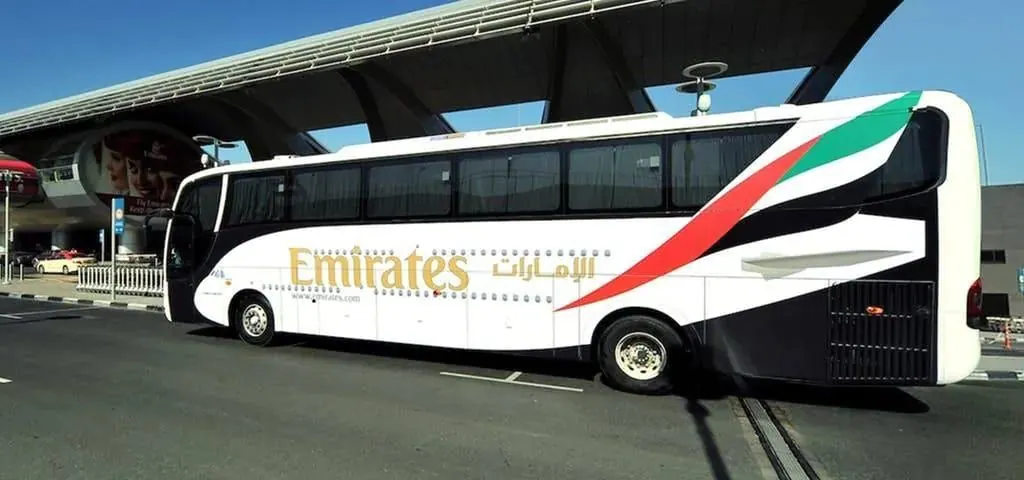
- The door side is the guest side. In the UAE the passenger door is on the kerb side, so that is where guests queue and wait. Put the brand name, website and any QR code there, at standing eye level near the door.
- The traffic side sells. The other side faces the road. Use it for the big image and the name, with fewer words.
- Name the bus on the front. The windscreen stays clear, but the panel below it and the destination display area can carry the name or a fleet number, so guests spot it as it pulls in.
- Design for the photo. Tourists photograph coaches from the front three-quarter angle. Make sure the name reads from that angle, not only from straight side on.
Hotel shuttles are different. They carry guests who have already booked, so the goal is to look like part of the hotel. Use the property's colours and logo with plenty of space. A busy promotional wrap on a five-star shuttle undoes the lobby.
Staff buses: the fleet number matters as much as the logo
Staff buses are seen by clients at site gates, by residents along the route and by your own people twice a day. Many run before sunrise, from accommodation areas in Al Quoz, Jebel Ali or Sonapur, where twenty buses may wait in the same yard.

- Make the bus number huge. Workers find their bus by number in poor light. Put a large, high-contrast fleet or route number on the front panel, the door side and the rear.
- Keep the company name clean. One logo and name, readable across a road. A staff bus says your company is organised and large enough to move its people properly; clutter says the opposite.
- Design for years. A staff bus wrap is a long-term asset, and cast vinyl with UV lamination lasts about 3-5 years in UAE heat. Avoid slogans or campaign lines you will tire of.
- Partial often wins. On white buses, a band or rear section in your colour, plus the name and number, does most of the work and keeps the original paint as the base.
School buses: designed for the gate
Parents see school buses every morning from their cars, in a queue at the gate, often over the roofs of other vehicles. That decides the layout.
- Name high on the side. Put the school name above the height of a parked SUV, not on the lower skirt.
- Crest plus name, not a collage. Photos of children and long lists of programmes turn into noise from ten metres away. The crest and name are what parents need to recognise the right bus.
- A clear contact number at the rear. Parents following the bus, or drivers behind it, should be able to read a number to call.
- Respect the safety spec. School transport has its own rules on colours, signs and markings. Every required marking, light and sign stays uncovered, and the design follows the transport provider's specification, so get that document before anyone starts drawing.
Plan fitting for weekends or school holidays so no route is missed.
Windows: decide bus by bus
Perforated one-way film lets the design run across the glass while passengers still see out. It is not always the right call, and the decision is different for each bus type.
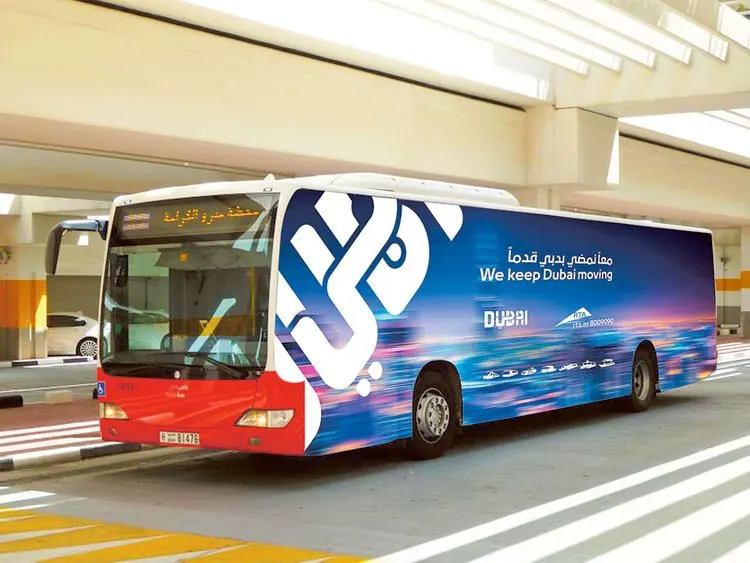
- Tour coaches: usually yes on side and rear passenger windows. The design reads as one image, and the film adds some shade.
- Staff buses: often only the rear window. Passengers on early runs tend to sleep or look out, and many staff buses already have dark factory tint, which the film darkens further.
- School buses: follow the school's and transport provider's view. Many keep side glass clear so staff can see in.
- Always clear: the windscreen, the driver's side windows and any emergency exit markings.
Fine text and faces do not work on perforated film, because the holes soften detail. Use window areas for colour and large shapes, and keep words on the body panels. How perforated film compares with other films is covered in the vehicle vinyl guide.
Body details that ruin a bus design if ignored
A bus is not a flat rectangle. Check that each of these is marked on the mockup before any artwork is placed.
- Luggage bay doors on coaches. They open upward and have hinge lines and handles. Faces and words placed across them break apart every time bags are loaded.
- Engine and AC vents. Rear engine grilles and side vents stay uncovered. Plan the design so it ends cleanly around them.
- Ribbed lower skirts. Many buses have fluted or ribbed skirt panels. Use solid colour there, not text.
- The folding passenger door. When it opens, it folds into a narrow stack. Keep the name clear of it.
- The Coaster's rounded rear. Large curves need cast film and simple graphics; small text bends out of shape.
- Fuel flap and service hatches. Colour can run over them, cut at the edges; words should not.
That mockup is also what goes to Mada Media for the Permit to Advertise on Vehicles, which a branded bus needs like any other commercial vehicle. The mockup guide shows what it must include, and the permit guide covers the application.
Route, sun and the side that ages first
Buses often park the same way every day. A hotel shuttle that waits facing the same direction in the afternoon sun bakes the same side for hours, every day, for years. That side and the roof will age first.
- Where you can, vary the parking direction or use shaded bays for long waits.
- Choose UV-laminated cast vinyl for every long-term bus; economy calendered film only suits a short event run.
- Choose high-contrast colours if the bus runs early mornings or evenings, so the name reads in headlights and street light.
- Hand wash rather than using brush bus washes, and keep pressure jets back from edges.
Before you sign, ask what the written warranty covers. Peeling, lamination failure and fading are the three that matter on a bus, and you want to know who pays for a panel that fails in year two. For buses branded only for a conference or season, plan removal from the start with the guide to temporary event branding.
Frequently asked questions
Should a tour bus carry the same design on both sides?
The same look, but not always the same content. The door side faces guests at pick-up, so it should carry the name, website and any QR code at eye level. The traffic side can carry the large image and name with fewer words.
Where should the bus number go so passengers can find it?
On the front panel below the windscreen, on the door side near the entrance and on the rear, in large high-contrast digits. The windscreen itself stays clear. Staff on early runs and guests at busy coach bays find the right bus much faster this way.
Can one-way film go over tinted bus windows?
It can, but the inside becomes darker, because the film adds to the existing tint. On buses with dark factory glass, many operators film only the rear window, or test one window first to judge the view from inside.
Can a staff bus also carry recruitment or service messages?
It can carry content that matches your trade licence, included on the permit mockup. Keep it short and long-lasting, because the wrap stays for years. Hiring drives and short campaigns are better on a separate, temporary panel planned with the permit in mind.
How do we keep a mixed fleet of Coasters and coaches consistent?
Fix the logo size, colours, number style and positions once, then redraw the layout for each model. A Coaster and a full coach will never share one file, but they can share one system. The fleet uniformity guide explains how.
Before you brief a designer: a short checklist
- For each bus, write down where it waits longest and who stands next to it there.
- Photograph both sides and the rear, and mark luggage doors, vents, the folding door and any ribbed skirt.
- Decide window coverage bus by bus, and note any tint already on the glass.
- Choose a fleet number style and size before the layout, not after.
- For school buses, get the transport provider's specification first.
With those answers, any designer can produce a layout that works on the first round. The vehicle branding process guide shows what happens next, from mockup and permit to fitting.

Bus Branding in Dubai, handled end to end
Coasters, staff buses and coaches wrapped with one-way window film, fitted around your timetable.

About the author
R Haque, Printajo Advertising LLC. Printajo has designed, permitted and installed vehicle branding, stickers and signage in Dubai since 2014, with 5,000+ projects for 500+ UAE companies.
This guide is written from that project experience and reviewed by our production and permits team (last reviewed 12 November 2026). About Printajo · See our work