Quick answer
Fleet uniformity comes from a written spec, not a good eye. Lock one film brand and series with its matching laminate, sign off brand colours on a printed strip of that film, keep one archived file set, draw a template for each vehicle model, and re-wrap in batches inside the 3-5 year life of cast vinyl in UAE heat, before fading shows.
Key takeaways
- Colour drift starts with materials. The same file printed on two different films will not match, even from the same printer.
- Sign off a printed strip, not a screen. Hold it against the vehicle in daylight before the fleet order.
- One template per model. A HiAce, an Urvan and an Isuzu NPR each need their own drawing of the same rules.
- Plan re-wraps by batch. A new panel beside a three-year-old side will always look brighter.
On this page (9 sections)
- Where fleet branding stops matching
- Write a fleet spec a new supplier cannot misread
- Getting colour to repeat on vinyl
- One template per vehicle model
- Heat, parking and the re-wrap cycle
- Leased vehicles, second suppliers and other emirates
- A yard check you can run in an hour
- Frequently asked questions
- Send us your fleet photos
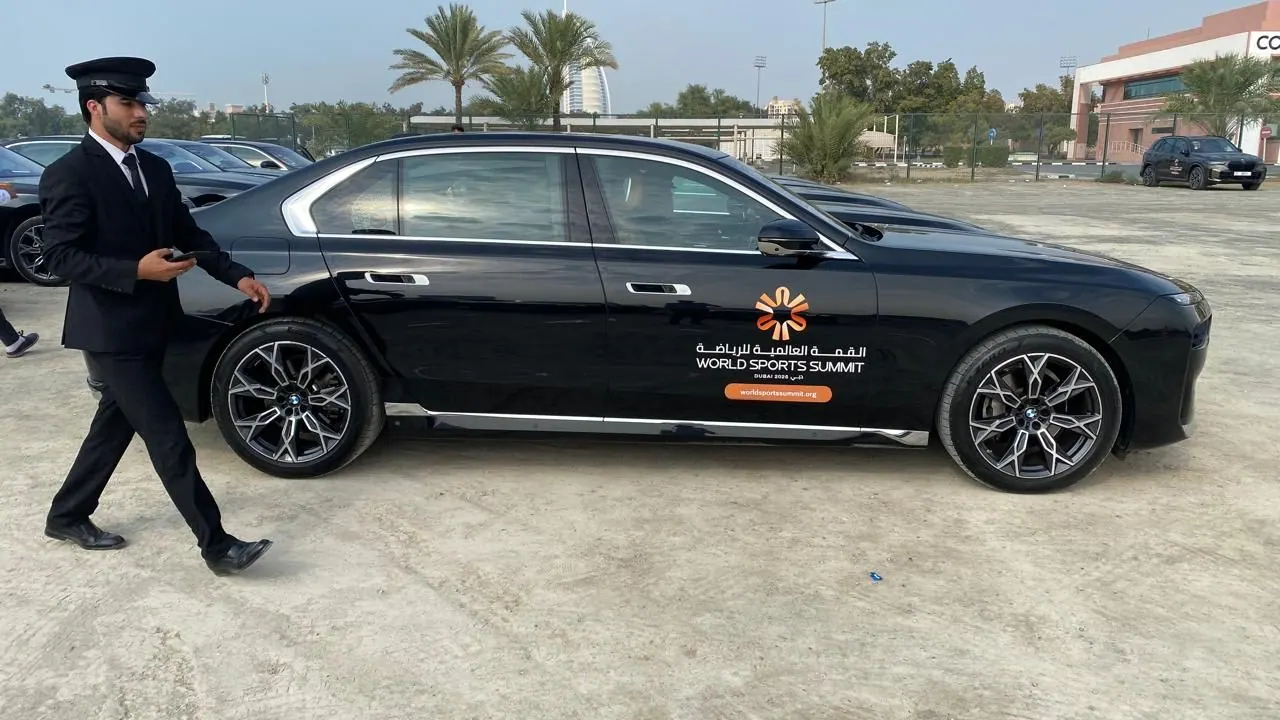
Three of your vans are parked outside a client's warehouse in Jebel Ali. One is the red you approved, one has faded towards salmon, and the third has the logo on the wrong side of the sliding door because a different shop fitted it after an accident. Your client does not think about suppliers. They think the company is careless.
We see this pattern every month in our Deira workshop. Almost no fleet starts out mismatched. It drifts: a repair here, a new lease van there, a cheaper printer for one job. This guide explains where that drift comes from and the few written rules that stop it. Fleet examples and design ideas sit in our fleet branding examples; this article is about keeping one design identical over years.
Where fleet branding stops matching
When a fleet manager sends us photos of a mismatched fleet, the cause is almost always one of four things. Each has a different fix, so it is worth naming which one you have before you spend money.
| Source of drift | What you see in the yard | The fix |
|---|---|---|
| Different film or laminate | Same red, two shades; one van glossy, one flatter | Lock one film brand, series and laminate in writing |
| Different printer or colour profile | Blues that lean purple or green on newer vehicles | One production source and an archived file set |
| Different age and exposure | Older vans paler, roofs and bonnets worst | Batch re-wrap cycle and matched repairs |
| Layout decided on the day | Logos at different heights, numbers split by door gaps | A scaled template for every model |
Most fleets that come to us have two or three of these at once. Fix the materials first. There is no point drawing perfect templates if the next repair is printed on a different film.
Write a fleet spec a new supplier cannot misread
"Red, gloss, logo on the doors" is not a specification. If your branding lives in one person's email or in a supplier's memory, it leaves when they do. A usable fleet spec is one page, and any competent wrap company should be able to reproduce your vehicles from it.
- Film brand and series. For example 3M IJ180Cv3 or Avery Dennison MPI 1105 for printed wraps. If your fleet runs on Hexis, Arlon, Mactac or Orafol film, name the brand and the exact product on the job sheet. The point is one choice, kept.
- Laminate and finish. The matching laminate for that film, and gloss, matte or satin. Gloss and matte versions of the same black are different colours on the road.
- Colour reference. A printed strip of each brand colour on the chosen film, signed and dated, plus the spot colour values in the file.
- File set. Vector artwork for every model, with fonts converted, archived under your company name.
- Placement rules. Logo height relative to the window line, phone number position, and clear zones around handles, fuel caps and lights.
- Permit reference. Which layout each vehicle's Dubai permit was approved on, so nobody changes the design on one vehicle without checking.
Give this sheet to every supplier who touches your vehicles, including a body shop that replaces a panel. If they cannot work to it, they should not be fitting your graphics.
Getting colour to repeat on vinyl
Your brand book was written for paper and screens. Vehicle film behaves differently, and that is why a Pantone swatch alone does not settle a colour argument.
Why the same file prints differently
Each film has its own white base, and each brand's white is a slightly different tint. Ink sits on that base, then laminate goes over it, and gloss and matte laminates reflect light differently. Change any layer and the colour moves. That is why a repaired door printed on a different brand looks wrong even when the file is identical.
How we lock it
- Before a fleet order, we print colour strips on the actual film and laminate and hold them against a vehicle outside, in Dubai daylight. You sign the strip, not a screen preview.
- We keep one colour profile for your job and note it on the file, so a reprint next year goes through the same settings.
- For a large rollout we try to print the whole batch from the same film stock, and we note what was used, because production lots can vary slightly.
Designs that repeat well
Solid spot colours and clean vector shapes are easy to reproduce on a single repair panel. Long gradients and photo backgrounds are not: the repair panel has to line up with artwork that has aged. If your livery leans on a gradient, simplify it before the fleet grows, not after.
One template per vehicle model
Installers should never decide logo placement in the bay. A fleet with five models needs five drawings of the same rules. Typical Dubai mixes we draw templates for:
- Toyota HiAce, standard and high roof (they are not interchangeable)
- Nissan Urvan panel van
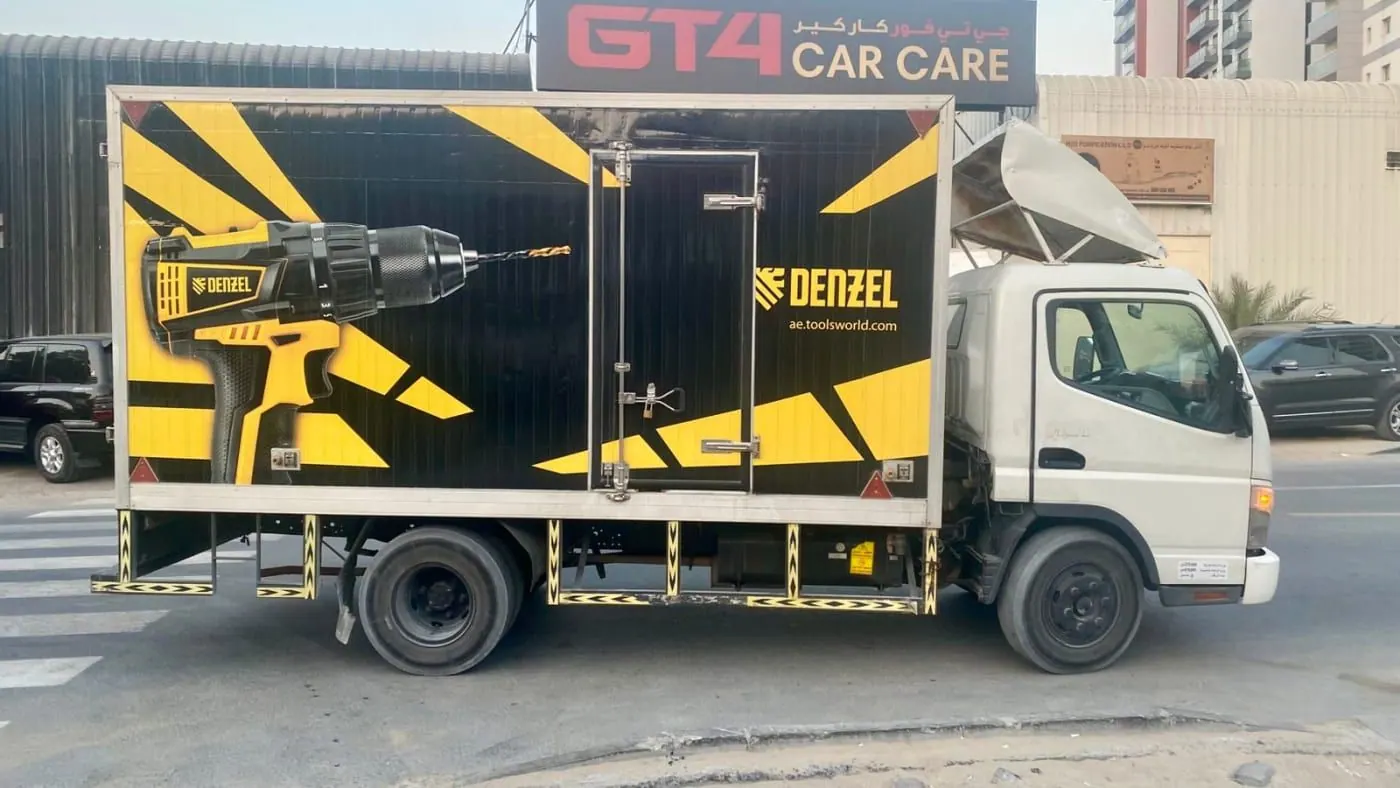
- Mitsubishi Canter or Isuzu NPR box truck
- Toyota Coaster staff bus
- Saloons such as a Toyota Camry or Nissan Sunny
The rules stay fixed while the layout changes. The logo sits at the same height relative to the window line on every model. The phone number is always on the rear doors or tailgate. The brand band starts at the same point behind the front wheel. A HiAce and a Coaster then read as one company even though no panel is the same size.
One trap: a new model year of the same van can move a body line, a lamp or a handle. When a new delivery arrives, we measure the first vehicle before printing for the rest. Detailed panel layouts for vans and trucks are on our van branding and truck wrap planning pages.
Heat, parking and the re-wrap cycle
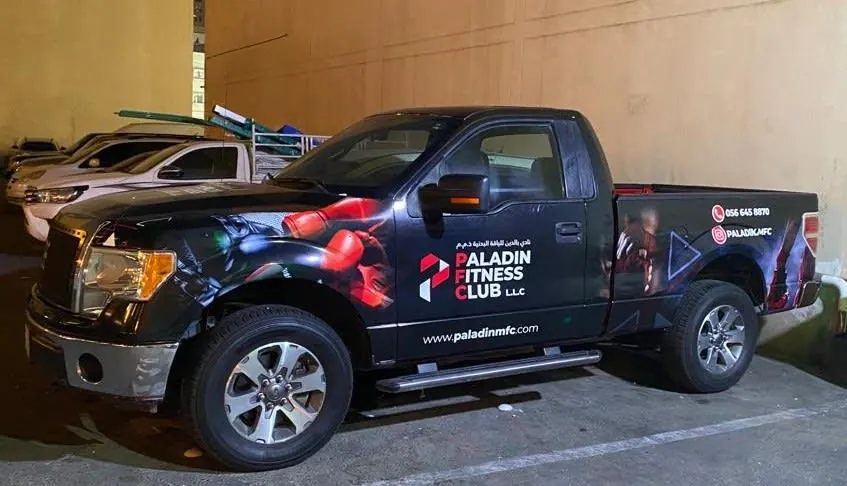
Cast vinyl with UV lamination lasts about 3-5 years in UAE heat. That range is the uniformity problem. A sedan in covered parking in Business Bay ages slowly. A pickup that stands all day on a site in Al Quoz, or a van that runs the coast road with salt air and sand, sits at the short end. Two vehicles wrapped on the same day can look a year apart by the third summer.
Rules that keep the fleet even
- Re-wrap in batches. Group vehicles by wrap date and re-do each group together inside that 3-5 year window, before fading is obvious, rather than one vehicle at a time when it looks bad.
- Repair to the side, not the panel. A new door beside an old side will look brighter. When the rest of that side has a few summers on it, re-doing the full side usually looks better than one new panel.
- Watch the flat surfaces. Roofs and bonnets take the most sun and go first. Where your design allows it, keep critical colour off them.
- Brief the drivers. Hand washing and shaded parking add life. Pressure washers aimed at edges do the opposite. Our warranty page has the care rules to share.
Leased vehicles, second suppliers and other emirates
These three situations break more fleets than accidents do.
Leased and rented vehicles
Use the same spec, printed on a cast film that removes cleanly at lease end. For the permit you need the lease agreement or an NOC from the leasing company. When extra lease vans are coming, send the spec to us before they arrive so they join the fleet already branded, not after a month of plain white.
A second supplier
Sometimes a vehicle gets fixed elsewhere, often after an accident far from Deira. Send that supplier the spec sheet and the files, and ask them to confirm the film and laminate before printing. If they substitute a "similar" film, expect the colour to move.
Vehicles registered outside Dubai
The Mada Media permit covers Dubai. If part of your fleet is registered in Sharjah or another emirate, check that emirate's requirements; do not assume a Dubai approval carries over. Design one master layout that respects the common rules, such as a clear windscreen and front side windows and no imitation of official vehicles, so the same artwork can be used everywhere. If you change the approved design on Dubai vehicles, the permit may need amending; see permit renewal and changes.
A yard check you can run in an hour
You do not need a consultant to know whether your fleet still matches. Once or twice a year, walk the yard on a clear morning and do this:
- Photograph every vehicle from both sides, front and rear, in the same light.
- Log make, model, plate, emirate of registration and the date of the current graphics.
- Mark each one: good, faded, damaged or off-template.
- Line up the side photos on one screen. Colour differences you missed in the yard jump out side by side.
- Send the sheet and photos to your wrap supplier and ask for a plan: which vehicles stay, which need a side re-done, which belong in the next re-wrap batch.
For larger fleets, our fleet branding service runs this audit for you and schedules the work in waves around your shifts.
Frequently asked questions
Can a repaired door ever match a three-year-old wrap exactly?
Rarely, because the old film has faded and the new one has not. If the original film, laminate and file are used, the repair will be close but slightly brighter. On a side with several summers on it, re-doing the full side usually gives a better result than one new panel.
Does mixing film brands on one fleet matter if the colours look close?
Yes, over time. Each brand's white base, adhesive and laminate age differently, so colours that look close on day one can drift apart within a couple of summers. Pick one brand and series for the fleet and use it for every repair.
Who should keep the master artwork files, us or the wrap company?
Both. Ask your supplier for the final vector files, colour references and model templates, and keep a copy in your company records. If you change supplier or the person who managed branding leaves, the next installer can work from the same set.
Should a fleet use gloss or matte laminate?
Either works if the whole fleet uses the same one. Gloss shows colour brighter and is easier to clean; matte hides reflections but marks more easily and looks darker. Mixing them is what breaks uniformity, because the same colour reads differently under each.
What should we do when a new model year joins the fleet?
Measure the first vehicle before printing for the rest. A facelift can move a lamp, a handle or a body line, and a template drawn for last year's van may put your logo across it. Adjust the template to the same placement rules, then print from the archived files.
Send us your fleet photos
WhatsApp +971 56 925 9327 with a side photo of each vehicle and your plate list. We will tell you which drift you have, draft a one-page spec for your fleet and suggest which vehicles to re-do first.
Fleet Branding in Dubai, handled end to end
We keep your fleet's colour records, film choice and model templates on file, so a vehicle added next year matches the ones on the road today.

About the author
Nizam Uddin, Printajo Advertising LLC. Printajo has designed, permitted and installed vehicle branding, stickers and signage in Dubai since 2014, with 5,000+ projects for 500+ UAE companies.
This guide is written from that project experience and reviewed by our production and permits team (last reviewed 4 November 2026). About Printajo · See our work